10 hypertension medications to know and how they work


Drazen Zigic // Shutterstock
Hypertension, commonly called high blood pressure, is one of the most widespread chronic conditions worldwide. It often develops without noticeable symptoms, yet it significantly increases the risk of heart attack, stroke, kidney disease, and heart failure when left untreated. The good news is that hypertension is highly manageable with the right combination of lifestyle changes and prescription medications.
Understanding hypertension and treatment goals
Blood pressure measures the force of blood against artery walls. Hypertension occurs when this pressure remains elevated over time. Even modest increases can damage blood vessels and organs.
Treatment goals usually include:
- Lowering systolic and diastolic blood pressure
- Reducing the risk of cardiovascular events
- Protecting kidney and vascular health
- Improving long-term quality of life
Many people require more than one medication to achieve control, SaveHealth, a prescription discount card website, reports. Doctors tailor therapy based on age, race, underlying conditions, and response to treatment.
Main types of blood pressure medications
Hypertension medications fall into several well-established categories. Each class lowers blood pressure in a different way, which is why combination therapy is common.
Major antihypertensive drug classes include:
- ACE inhibitors
- Angiotensin II receptor blockers, also called ARBs
- Calcium channel blockers
- Beta blockers
- Diuretics
- Alpha blockers
- Central acting agents
- Vasodilators
- Combination medications
Understanding these categories helps explain why certain drugs are chosen.
ACE inhibitors for high blood pressure
ACE inhibitors relax blood vessels by blocking the enzyme that produces angiotensin II, a hormone that narrows arteries.
Common ACE inhibitors include:
- Lisinopril, sold as Zestril and Qbrelis.
- Enalapril, sold as Vasotec and Epaned.
- Quinapril, sold as Accupril.
- Ramipril, sold as Altace.
- Benazepril, sold as Lotensin.
- Captopril, sold as Capoten.
- Fosinopril, sold as Monopril.
- Moexipril, sold as Univasc.
- Perindopril, sold as Aceon.
- Trandolapril, sold as Mavik.
Combination products such as Accuretic (quinapril and hydrochlorothiazide), Vaseretic (enalapril and hydrochlorothiazide), and Zestoretic (lisinopril and hydrochlorothiazide) combine an ACE inhibitor with a diuretic for stronger blood pressure control.
ACE inhibitors are often first-line therapy, particularly for people with diabetes or kidney disease.
Angiotensin II receptor blockers
ARBs block the action of angiotensin II at its receptor, unlike ACE inhibitors, which block the enzyme that makes angiotensin II. This minute difference in mechanism produces similar outcomes, however, it eliminates a key side effect, cough. ARBs offer the same benefits to ACE inhibitors and are often used when ACE inhibitors cause cough.
Common ARBs include:
- Losartan, sold as Cozaar.
- Valsartan, sold as Diovan.
- Irbesartan, sold as Avapro.
- Olmesartan, sold as Benicar.
- Candesartan, sold as Atacand.
- Azilsartan, sold as Edarbi
Combination products include Hyzaar (losartan and hydrochlorothiazide), Avalide (irbesartan and hydrochlorothiazide), Edarbyclor (azilsartan and chlorthalidone), Exforge (amlodipine and valsartan), Tribenzor (olmesartan, amlodipine and hydrochlorothiazide), and Prestalia (perindopril and amlodipine).
ARBs are widely prescribed and generally well tolerated.
Calcium channel blockers
Calcium channel blockers reduce the movement of calcium into heart and blood vessel muscle cells, allowing arteries to relax.
Common calcium channel blockers include:
- Amlodipine, also known as Norvasc.
- Nicardipine, also known as Cardene.
- Nifedipine, also known as Procardia and Adalat.
- Felodipine, also known as Plendil.
- Nimodipine, also known as Nymalize.
- Nisoldipine, also known as Sular.
- Diltiazem formulations such as Tiazac, Cartia XT, Matzim LA, Dilacor XR.
- Verapamil formulations such as Calan (SR), Isoptin (SR), Verelan.
- Norliqva and Katerzia, a liquid amlodipine.
Combination medications such as Caduet (amlodipine and atorvastatin), Azor (amlodipine and olmesartan), Lotrel (amlodipine and benazepril), and Exforge (amlodipine and valsartan) pair calcium channel blockers with statins or ARBs.
These medications are effective across diverse patient groups.
Beta blockers for blood pressure control
Beta blockers lower blood pressure by slowing the heart rate and reducing the force of heart contractions.
Common beta blockers include:
- Atenolol, sold as Tenormin.
- Metoprolol, sold as Lopressor.
- Metoprolol succinate (ER formula), sold as Toprol XL.
- Carvedilol, sold as Coreg.
- Nebivolol, sold as Bystolic.
- Bisoprolol, sold as Zebeta.
- Labetalol, sold as Trandate and Normodyne.
- Nadolol, sold as Corgard.
- Betaxolol, sold as Kerlone.
- Pindolol, sold as Visken.
Combination products such as Ziac (bisoprolol and hydrochlorothiazide) and Dutoprol (metoprolol succinate and hydrochlorothiazide) pair beta blockers with diuretics.
Beta blockers are often prescribed when hypertension coexists with heart disease or arrhythmias.
Diuretics for hypertension
Diuretics help the kidneys remove excess sodium and water, lowering blood volume and pressure.
Common diuretics include:
- Hydrochlorothiazide, also known as Microzide/Hydrodiuril/Esidrix/Oretic.
- Chlorthalidone, also sold as Thalitone.
- Indapamide, also sold as Lozol.
- Chlorothiazide, sold as Diuril.
- Furosemide, sold as Lasix and Furocix.
- Torsemide, sold as Demadex and Soaanz.
- Metolazone, sold as Zaroxolyn/Mykrox/Diulo.
- Amiloride, sold as Midamor.
- Triamterene and Hydrochlorothiazide, sold as Maxzide (tablets) and Dyazide (capsules).
- Spironolactone, sold as Aldactone.
- Eplerenone, sold as Inspra. Used to treat patients with high blood pressure and heart failure who may have experienced side effects using spironolactone (gynecomastia).
Diuretics are frequently used as first-line therapy or in combination with other medications.
Alpha blockers and central acting agents
Alpha blockers relax blood vessels by blocking alpha receptors.
Common alpha blockers include:
- Doxazosin, sold as Cardura.
- Terazosin, sold as Hytrin.
- Prazosin, sold as Minipress.
- Phenoxybenzamine, sold as Dibenzyline.
Central acting agents reduce nerve signals that raise blood pressure.
Examples include:
- Clonidine, sold as Catapres and Kapvay (ER formula).
- Guanfacine, sold as Tenex.
- Guanabenz, sold as Wytensin.
These medications are often reserved for resistant hypertension or specific clinical situations.
Vasodilators and other antihypertensive options
Vasodilators directly relax blood vessel walls.
Examples include:
- Hydralazine, sold as Apresoline.
- Minoxidil, sold as Loniten.
Other important medications include:
- Aliskiren, sold as Tekturna, a direct renin inhibitor.
- Sildenafil and tadalafil PAH formulations, such as Revatio, Adcirca, Alyq, Tadliq, and Tadalafil PAH, mainly for pulmonary hypertension.
- Ambrisentan, Letairis Opsumit, Tracleer, Uptravi, and Tryvio for specialized pulmonary hypertension treatment.
20 commonly prescribed hypertension medications
- Lisinopril
- Losartan
- Amlodipine
- Valsartan
- Hydrochlorothiazide
- Chlorthalidone
- Atenolol
- Metoprolol
- Carvedilol
- Nebivolol
- Enalapril
- Ramipril
- Benazepril
- Irbesartan
- Olmesartan
- Candesartan
- Clonidine
- Doxazosin
- Hydralazine
- Furosemide
These medications span multiple drug classes and are often used together for optimal control.
Common Hypertension Medications by Drug Class
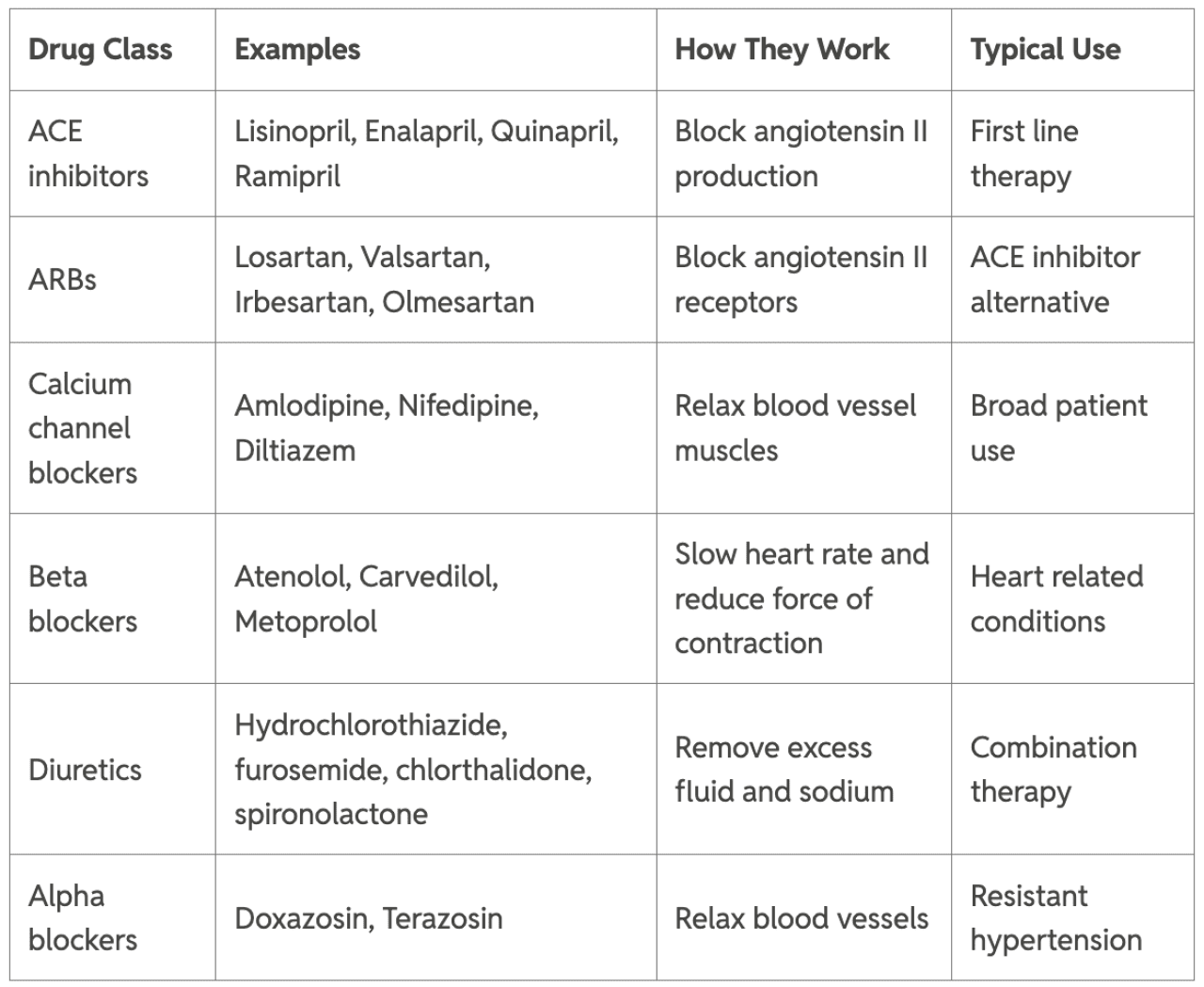
SaveHealth
Blood pressure medication side effects and safety
Most hypertension medications are safe when taken as prescribed, but side effects can occur.
Common side effects include:
- Dizziness or lightheadedness
- Increased urination with diuretics
- Swelling in the legs with some calcium channel blockers
- Fatigue or slow heart rate with beta blockers
- Dry cough with ACE inhibitors
Doctors monitor blood pressure, kidney function, and electrolytes to ensure safety and adjust treatment if needed.
How to choose blood pressure medication
There is no single best medication for everyone. Doctors consider:
- Severity of blood pressure elevation
- Age and overall health
- Kidney, heart, or metabolic conditions
- Potential drug interactions
- Cost and insurance coverage
Many patients benefit from combination therapy.
Frequently asked questions about hypertension medications
What are the different types of hypertension medications?
They include ACE inhibitors, ARBs, calcium channel blockers, beta blockers, diuretics, alpha blockers, and others.
What is the safest medication for high blood pressure?
Safety depends on the individual and their health condition. ACE inhibitors, ARBs, and calcium channel blockers are commonly well tolerated long-term.
What is the most effective medication for hypertension?
Combination therapy is often the most effective approach however, each individual is unique dependent on their health status and disease state.
Hypertension medications
Hypertension is a manageable condition with the right treatment plan. From widely prescribed medications like lisinopril, losartan, amlodipine, valsartan, hydrochlorothiazide, atenolol, carvedilol, and chlorthalidone to combination therapies such as Accuretic, Hyzaar, Lotrel, Exforge, Tribenzor, Prestalia, Zestoretic, and Ziac, there are many effective options.
Specialized treatments such as Tekturna, Inspra, hydralazine, minoxidil, and pulmonary hypertension therapies expand care for complex cases.
This story was produced by SaveHealth and reviewed and distributed by Stacker.


