The best hurricane forecasts of 2025 came from an AI model
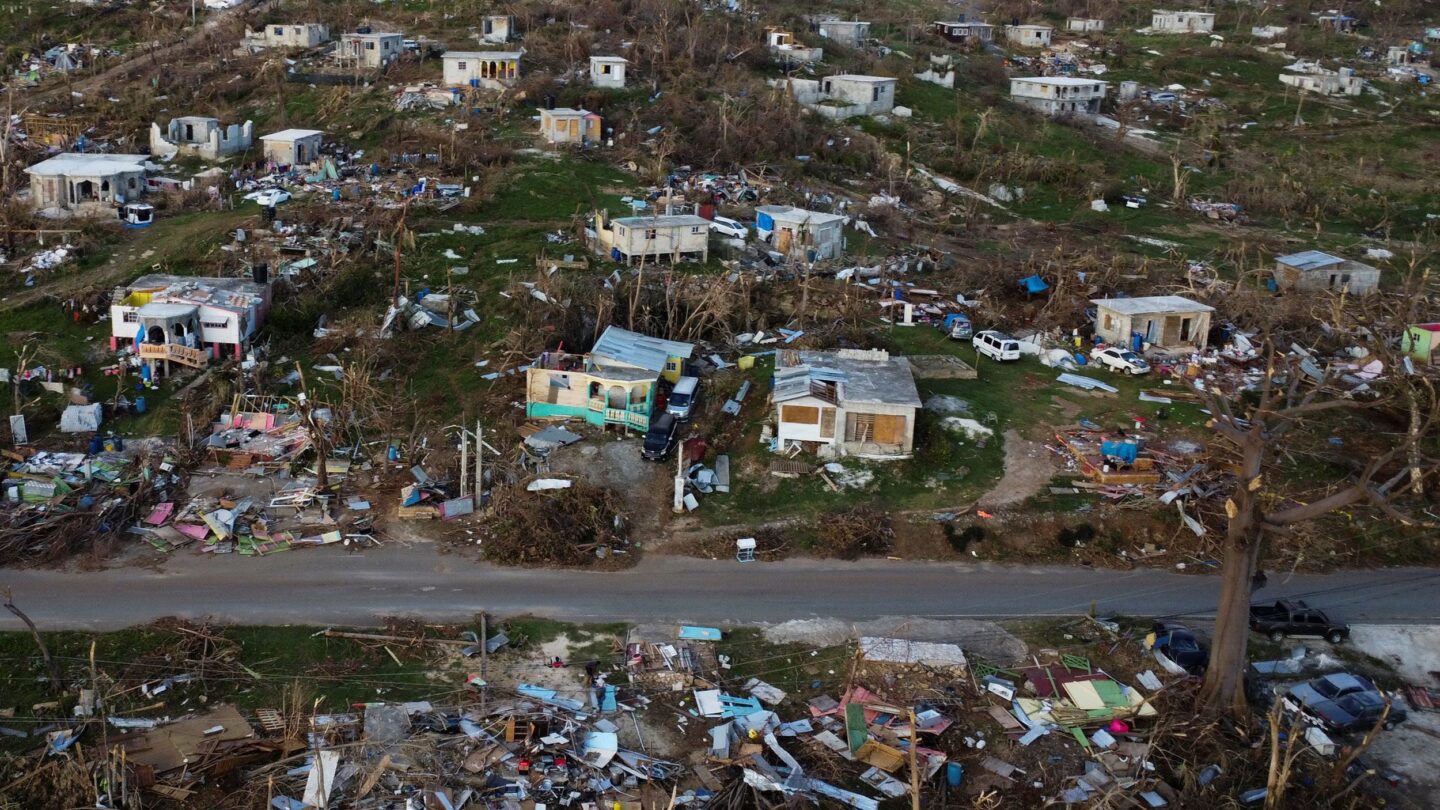
Hurricane Melissa churns northwest through the Caribbean Sea on October 27

By Andrew Freedman, CNN
(CNN) — The 2025 Atlantic hurricane season, which officially ended November 30, showcased the growing capabilities of artificial intelligence for storm forecasting. And experts say there is no turning back.
This season, the National Hurricane Center supplemented its usual cadre of traditional models with AI-driven models, including one developed by Google DeepMind. The forecasters say that particular AI model allowed them to reach the “holy grail” of hurricane forecasting: accurate predictions of rapid changes in a storm’s intensity.
Forecasts that predict the path of a hurricane using traditional models have become far more accurate in recent years, but intensity forecasts lagged in reliability, particularly in terms of predicting rapid intensification.
The DeepMind model gave forecasters an unusually high degree of confidence that Hurricane Melissa was going to rapidly intensify about three days before it struck Jamaica as a catastrophic Category 5 storm. This was the first time NHC predicted a storm would become a Category 5 monster from the moment of its formation as a Category 1 hurricane.
Predicting rapid intensification is becoming a more critical task as climate change leads storms to undergo this process more frequently, including right up through landfall.
In their forecast at the time and in a recent, end-of-season analysis, NHC forecasters specifically cited the DeepMind model as giving them increased confidence in the forecast.
According to Wallace Hogsett, who serves as the science and operations officer at the NHC in Miami, forecasters are becoming more accustomed to trusting the output of AI-driven models, even if their ins and outs are not as well-understood as more traditional models.
Those traditional models are based in physics and use complex mathematical equations to simulate how heat, moisture, wind and more move and interact in the atmosphere. The European Model and the American Global Forecast System — long-favored tools of the NHC — take hours to arrive at a projection and require the use of powerful supercomputers to operate them.
In contrast, AI models are based on data about historical weather conditions and use that information to simulate a hurricane’s likely path and intensity. They can be run at high resolution, in the cloud and even on some desktop computers, in just minutes.
The DeepMind model is an AI ensemble, which means it is run many times at once, each with slightly varying atmospheric conditions to determine how sensitive the forecast is to minute differences that may exist as the simulation begins.
This can help forecasters get a better sense of statistical certainty in the projection and help them decide how much trust to put in the results.
“I think it’s pretty clear that these AI models are going to be useful, and they’re going to be a component of the hurricane forecast process going forward,” Hogsett said in an interview. “In particular, the Google DeepMind model appears to be one of the top-performing individual models.”
However, Hogsett downplayed the significance of how well the DeepMind ensemble — or any other model — performed during a particular storm, noting that what matters more is longer-term performance across an entire season with multiple storms.
A representative for Google DeepMind also cautioned against reading too much into the model’s capabilities based on its performance during a single storm, such as Hurricane Melissa.
But James Franklin, a former branch chief at the NHC, did an analysis and found that the Google DeepMind ensemble beat all the other computer model guidance in terms of its track and intensity forecast accuracy for the entire season, even though it did not perform evenly with each storm that formed.
Even with that result, however, Franklin still urged caution. “This is a new tool, and in some ways, it’s a more difficult tool to use than the European or the GFS,” he said. That’s because, to forecasters like him, AI models are “kind of a black box.”
“It looks for patterns, essentially in past data. It’s not tied to physics. It can come up with sort of any answer that it thinks it finds in the past data,” he said.
This can make it hard for meteorologists to evaluate the reliability of an AI forecast, and explains why being able to do multiple, slightly different model runs simultaneously is such an important feature of the DeepMind ensemble in particular. Meteorologists are used to other ensemble forecasting models, so using an AI-driven one could come somewhat more naturally for some.
Challenges aside, the NHC’s end-of-season analysis made it clear that AI is playing a role in improving rapid intensification forecasts, saying “significant progress is clearly underway.”
John Cangialosi, an NHC senior hurricane specialist, said hurricane forecasting is in its fastest period of change that he has seen in 20 years on the job. But it isn’t the case, he said, that the AI models are going to swoop in and take over from the physics-based ones, or even take forecasting jobs away from humans.
“AI just is an amazing tool. [But] it makes mistakes. It has errors, just like every other approach. There is no way that any of these [AI] models can get you the right answer, exactly the right answer for track, intensity, structure, or, more importantly, impacts,” Cangialosi said.
While tech companies such as Google, Microsoft and Nvidia have had a head start in developing AI-based weather and climate models, the National Oceanic and Atmospheric Administration and its international partners are also getting into the game with their own new AI models.
These will be ready for testing during next year’s Atlantic hurricane season.
The-CNN-Wire
™ & © 2025 Cable News Network, Inc., a Warner Bros. Discovery Company. All rights reserved.


