How to start a career as a fitness instructor


Maffi // Shutterstock
The fitness industry provides various programs and services that motivate individuals to exercise regularly. Exercise is known to have positive effects on mental health, including reducing symptoms of anxiety and depression. Additionally, group classes foster a sense of community and provide social support that can help people stay motivated and stick to their fitness goals.
Fitness instructors create engaging and enjoyable workouts to make the fitness experience more enjoyable for their clients. If you have a strong motivation to make a positive impact on people’s lives and inspire them to prioritize their health and fitness, Zumba shows how you can start a career as a fitness instructor.
The Role of a Fitness Instructor
A fitness instructor holds a multifaceted role in guiding individuals and groups toward achieving their fitness goals. Fitness instructors are professionals who lead and teach exercise classes, provide guidance and support clients in their fitness journeys.
The job outlook for fitness instructors and trainers is projected to grow 14% from 2023 to 2033, indicating a strong demand for qualified professionals in the fitness industry. This growth reflects the increasing emphasis on health and wellness, as more people prioritize their fitness and seek guidance from knowledgeable instructors.
Fitness instructors have several responsibilities.
- Leading classes: Instructors lead group exercise sessions, such as aerobics, Zumba, yoga or strength training, creating a motivating and energetic environment for participants.
- Demonstrating techniques: Instructors demonstrate proper exercise techniques to minimize injuries and ensure clients perform exercises safely and effectively.
- Monitoring progress: They track clients’ progress, adapt programs as needed and provide feedback to help clients stay on track.
- Providing support: Instructors offer motivation and encouragement to help clients overcome challenges and maintain commitment to their fitness routines.
Fitness instructors possess several skills, particularly communication, motivation and adaptability. You need clear communication to instruct clients and ensure they understand the exercises and techniques in the class. You also need to inspire and motivate clients to achieve their fitness goals and maintain a positive mindset. Finally, fitness instructors must adapt workouts to meet the diverse needs of clients, as each individual or group may have different fitness levels and goals.
Zumba
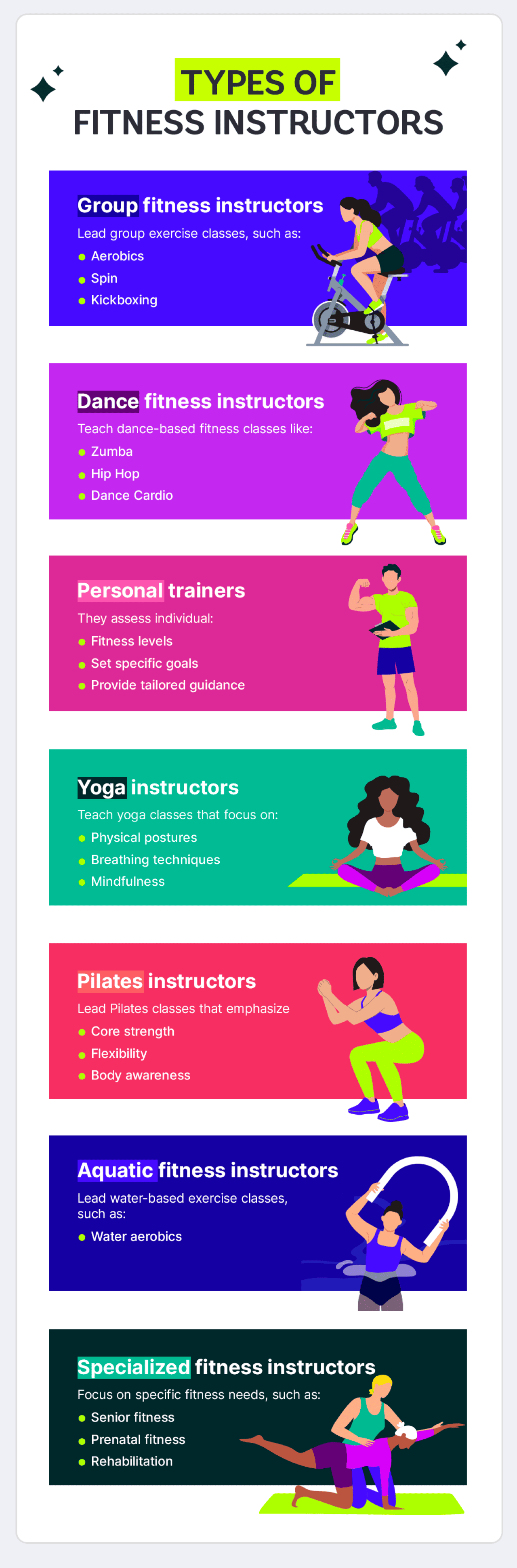
There are various types of fitness instructors, each specializing in different areas and adding unique contributions to the fitness industry. Here are some examples:
- Group fitness instructors lead group exercise classes, such as aerobics, spin or kickboxing. They create a motivating and energetic environment for participants with music and choreography.
- Dance fitness instructors teach dance-based fitness classes. These instructors focus on rhythm, coordination and enjoyment of movement by combining dance moves with fitness to create a fun workout experience.
- Personal trainers usually work with clients one-on-one to develop personalized fitness programs. They assess individual fitness levels, set specific goals and provide tailored guidance and support.
- Yoga instructors teach yoga classes that focus on physical postures, breathing techniques and mindfulness.
- Pilates instructors lead Pilates classes that emphasize core strength, flexibility and body awareness.
- Aquatic fitness instructors lead water-based exercise classes, such as water aerobics. Water sets the stage for low-impact workouts suitable for various fitness levels.
- Specialized fitness instructors focus on specific populations or fitness needs, such as senior fitness, prenatal fitness or rehabilitation. They tailor programs to meet the unique needs of these groups while ensuring safety.
How to Become a Fitness Instructor
Becoming a fitness instructor involves the right type of training and skills, depending on what you want to specialize in.
Getting the Right Training
Training will vary depending on the type of fitness instructor you want to be. Instructors can also pursue specialized certifications in specialized areas, such as yoga, indoor cycling or high-intensity interval training (HIIT). They can also choose to specialize in specific areas, such as senior fitness, prenatal fitness or sports performance. Focusing on a niche can enhance your marketability and the opportunity to work with diverse populations.
The fitness industry is constantly evolving. Some organizations require ongoing education to remain current with the latest trends, techniques and research. Many fitness facilities also require instructors to undergo cardiopulmonary resuscitation (CPR) and automated external defibrillator (AED) training. These skills help ensure client safety during workouts.
Developing Skills and Experience
Developing a combination of skills and gaining relevant experience will empower you to help clients achieve their fitness goals. You’ll understand the challenges clients face while sharing your journey and insights.
There are a few options to gain experience as a fitness instructor. You can seek internships or volunteer at local gyms, community centers or fitness studios. This hands-on experience will allow you to observe seasoned instructors, learn group session management and understand client interactions. You could also consider starting with a part-time role in a fitness facility. A flexible schedule can help you gain experience as you begin building a client list.
Another route to build experience and presence is to showcase your expertise on platforms like Facebook, Instagram, TikTok and YouTube. Share your fitness journey, post workout tips and engage with your audience and potentially attract clients. You can also consider starting a fitness blog to share insights, tips and personal experiences.
In addition, developing these skills will help you stand out as a fitness instructor.
- Motivational skills: Learn techniques to inspire clients, as achieving fitness goals can be challenging. Positive reinforcement and encouragement can significantly enhance their motivation.
- Communication: Effective communication is vital for demonstrating exercises, explaining their benefits and correcting techniques. Clear communication fosters trust and understanding between you and your clients.
- Active listening: Being an active listener helps you understand clients’ abilities, limitations and goals, allowing you to tailor your approach to their needs.
- Customer service: Treating clients with respect and care can help you build loyalty and a positive reputation in the fitness community.
- Problem-solving: Each client is unique, and strong problem-solving skills will enable you to find appropriate fitness solutions for individual needs.
- Empathy: Every client’s fitness journey is unique. Being adaptable and empathetic allows you to tailor your approach to meet their individual needs. Creating a safe and inclusive environment encourages clients to share their concerns and challenges.
How to Start a Career as a Fitness Instructor
Zumba
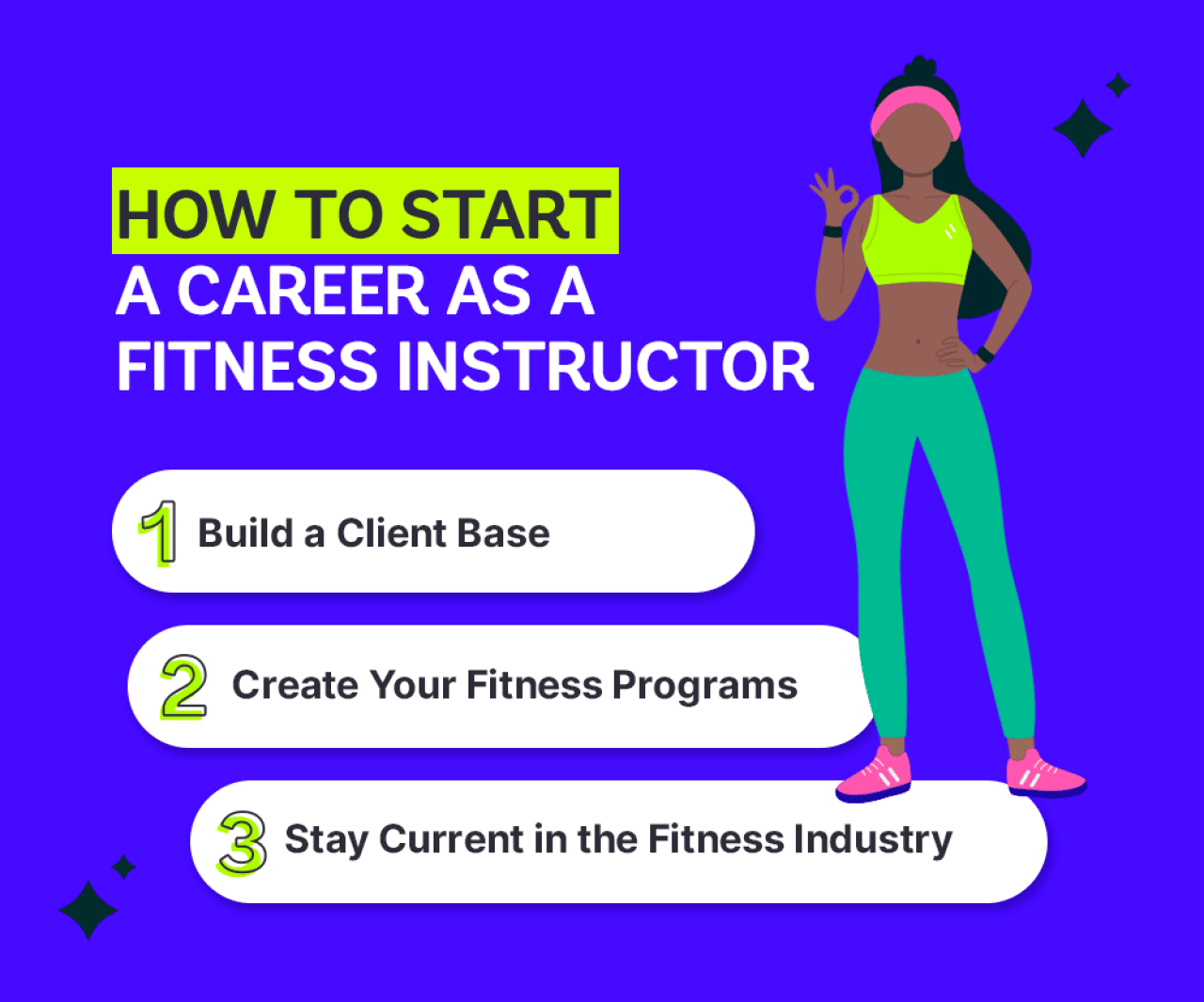
After you’ve gained some experience and the right training, you can start a career as a fitness instructor. Here are some steps to help you get started.
Build a Client Base
Building a client base as a group fitness instructor is essential for establishing a successful career in the fitness industry. Here are several strategies to attract and retain participants for your classes:
- Use your network: Encourage friends, family and acquaintances to attend your sessions. Personal recommendations can be powerful in attracting new participants. You can also participate in local events, health fairs or community gatherings to promote your classes and connect with potential clients.
- Offer free introductory classes: Host free or discounted introductory classes to allow potential clients to experience your teaching style and the benefits of your classes without a financial commitment. Otherwise, you could organize special events, such as themed classes or fitness challenges, to attract new participants and create excitement around your offerings.
- Build relationships with participants: Provide positive reinforcement and support during classes. Celebrate participants’ achievements and progress to foster a sense of community and belonging. Building rapport can enhance their experience and encourage loyalty.
- Collaborate with other fitness professionals: Collaborate with other fitness instructors, personal trainers or wellness professionals to cross-promote each other’s services. This can help you reach a broader audience and attract new clients. Use these connections to establish referral programs where you can refer clients to each other and offer incentives for successful referrals.
- Promote your sessions: Use a combination of traditional and online marketing efforts to promote your classes. Create eye-catching flyers, posters and social media graphics to distribute in local gyms, community centers, and online platforms.
- Offer incentives: Consider offering discounts for new participants or package deals for multiple classes. This can encourage people to try your classes and commit to attending regularly.
Create Your Fitness Programs
You’ll want to create fitness plans that are effective, safe and customizable to your clients’ needs. These steps can help you create detailed, effective programs.
1. Set clear objectives. Define the primary objectives of your fitness program. For example, you may want to improve cardiovascular fitness or promote flexibility. Establish what you want your participants to achieve by the end of each class. Do you want them to complete a specific number of exercises or master a new skill?
2. Design the class structure: Start each class with a warmup to prepare your clients for exercise. Include dynamic stretches and light cardio to increase heart rate and flexibility. Then, plan the core portion of your session by incorporating a mix of exercises and choreographies. Finally, end each class with a cool-down period that includes static stretching and relaxation techniques to promote recovery and flexibility.
3. Create a weekly schedule: Determine how often you’ll hold classes and create a consistent schedule that participants can rely on. Consider incorporating themed classes to attract participants and create excitement.
4. Plan for progression: Gradually raise the intensity or complexity of exercises over time to challenge your clients and promote improvement. This can include increasing repetitions or introducing new movements.
5. Demonstrate and monitor: Clearly demonstrate each exercise and explain proper form to minimize the risk of injury. Provide modifications for different fitness levels when necessary. It’s important to continuously observe participants during the session to ensure they’re using correct techniques and to provide assistance as needed.
6. Gather feedback and adapt: Get regular feedback from participants about their experiences and preferences. This information can help you make necessary adjustments to the program. Be prepared to adapt sessions based on participant needs, preferences and any changes in group dynamics.
Stay Current in the Fitness Industry
Staying current in the fitness industry is essential for fitness instructors to provide the best possible service to their clients and maintain their professional credibility. These strategies can help you stay updated and informed.
- Take online courses and webinars: Use online platforms that offer courses and webinars on various fitness topics. Webinars often cover the latest research, trends and practical applications in fitness.
- Network with other professionals: Build relationships with other fitness professionals through social media, local fitness events or networking groups. Sharing experiences and insights can help you stay informed about industry developments.
- Read industry publications: Subscribe to fitness magazines, journals and online newsletters that cover the latest trends, research and techniques.
- Talk with clients: Pay attention to the types of workouts and fitness trends that clients are interested in. This can help you tailor your classes and offerings to meet their demands.
- Experiment with new techniques: Participate in different fitness classes or training methods to experience new techniques firsthand. You’ll broaden your knowledge and be able to share personal insights with your clients.
You Can Make Physical Activity Fun as a Fitness Instructor
The fitness industry promotes health and wellness by encouraging physical activity, improving mental health, providing education, fostering community and preventing chronic diseases. Its impact extends beyond individual health — it’s contributing to healthier societies overall.
Building a sense of community and fostering relationships with clients can be rewarding experiences for fitness instructors. No matter what type of fitness instructor you choose to become, with passion and dedication, you can inspire others to lead healthier lives.
This story was produced by Zumba and reviewed and distributed by Stacker.


